Rubber Dam Isolation Simplified: Every Technique Explained with Clinical Tips and Tricks — PDF Guidebook
Rubber Dam Isolation Simplified: Every Technique Explained with Clinical Tips and Tricks — PDF Guidebook
You will be able to access this PDF file at the “My Courses” tab immediately after completing your purchase.
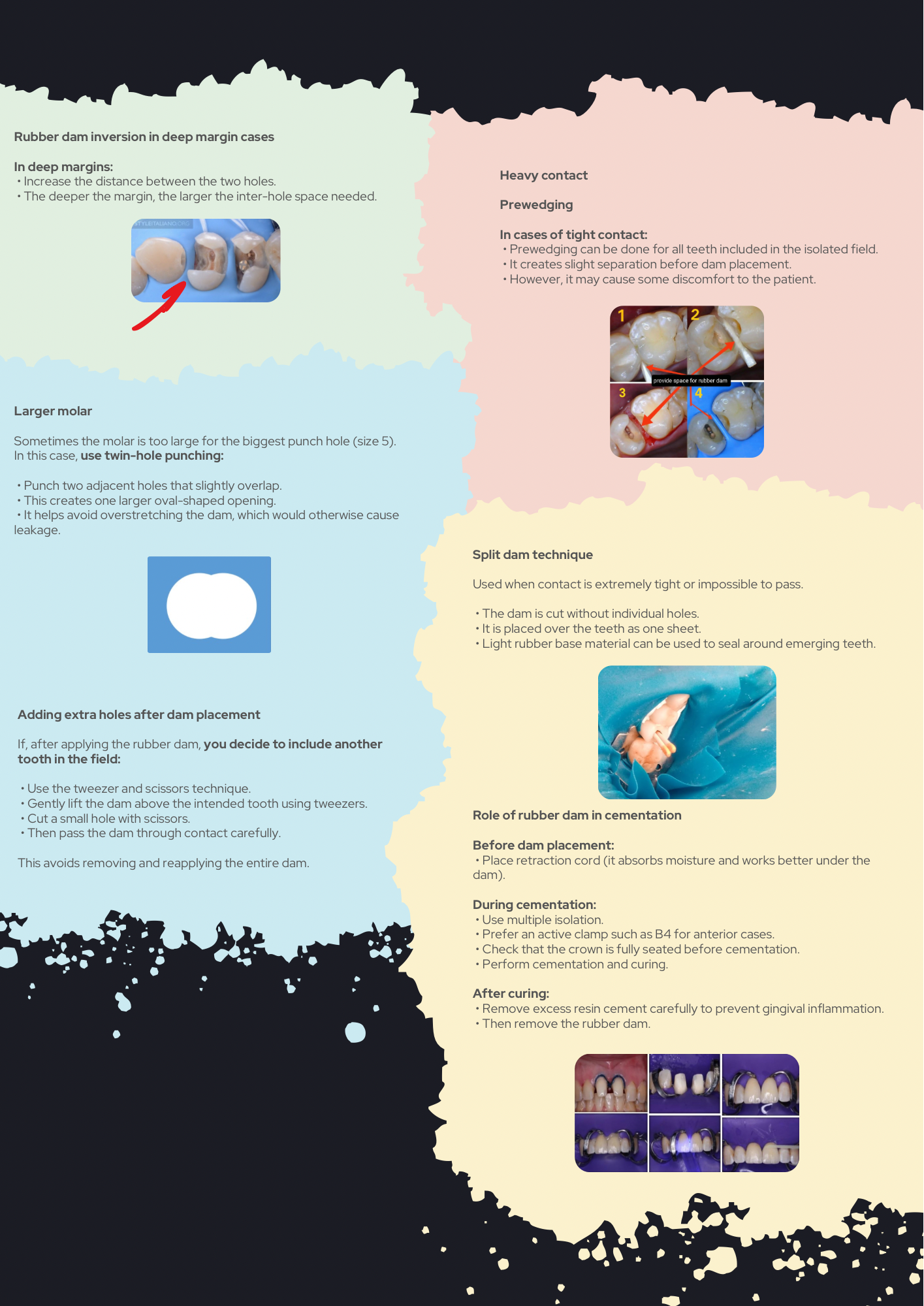
This downloadable PDF guidebook explains rubber dam isolation step-by-step with clear images, helping you understand exactly how to place it efficiently and why each step matters clinically. The guide focuses on the most common challenges clinicians face in daily practice—difficulty placing the dam, selecting the correct clamp, achieving proper inversion, and managing difficult cases where isolation becomes frustrating or time-consuming. It also covers practical solutions, alternative isolation methods, and small adjustments that make rubber dam placement faster, easier, and more predictable.
The points below break down these topics clearly:
• Rubber Dam Application Techniques and Case Selection: Clear step-by-step guidance on the main ways to place a rubber dam, including indications, contraindications, and when each technique works best clinically.
• Clamps and Clamp Selection Made Easy: Learn the most commonly used clamp types, how to choose the right clamp for each tooth, and simple ways to adjust or modify clamps when standard options do not fit the case.
• How to Get Easy Rubber Dam Inversion: Practical tips to achieve reliable inversion, improve soft tissue control, and create a better seal for more secure and predictable isolation.
• Why Rubber Dam Is Used: A clear explanation of the clinical benefits of rubber dam isolation, its importance for treatment quality and patient safety, and situations where its use may not be necessary.
• Difficult Cases, Alternatives, and Clinical Tips: Smart strategies for challenging situations such as partially erupted teeth, broken crowns, or limited access, along with useful alternatives and practical clinical shortcuts.
• Punching the Holes Without Tearing: Simple techniques for proper hole spacing, punch positioning, and avoiding common mistakes that cause the dam sheet to tear during placement.
• Other Ways to Isolate the Field: Understand when and how to use liquid dam, Teflon tape, gingival cord, cotton rolls, and other isolation methods when a traditional rubber dam is not the best option.
• Rubber Dam Basics and Components: A practical overview of the rubber dam system, including sheet types, thicknesses, colors, frames, punches, forceps, clamps, and other essential tools used in daily practice.
Couldn't load pickup availability
Share